You Can’t Hurt Anybody”: How to Save a Life with an AED
Automatic external defibrillators (AEDs) are becoming increasingly common in public places across Canada — from recreation centres and airports to community halls and schools. As access grows, so does the need for the public to understand just how simple, safe, and life-saving these devices truly are.
AEDs are designed for everyday people, not medical professionals. With clear voice prompts, visual cues, and built-in safety checks, they make it possible for anyone — even someone with no prior training — to help save a life during cardiac arrest.
This article was inspired by a CBC report on public AED use, which you can read here:
🔗 Original CBC Story: You can’t hurt anybody’: How to save someone’s life with a defibrillator
AEDs Are Saving Lives — And You Can Use One Too
Chris Landry of Island First Aid Services has seen firsthand how AEDs used by regular bystanders have saved many lives.
“If you’re waiting for emergency responders to get to you, there’s a very good chance it’s not going to happen soon enough,” Landry explains.
“People off the street using them — that’s what’s saving people’s lives.”
Cardiac arrest happens suddenly, and every minute without CPR and defibrillation reduces survival significantly. AEDs help restart a heart that has stopped beating effectively by delivering a safe, controlled shock when needed.
In some provinces, including Alberta and P.E.I., there are ongoing plans to place AEDs in all public schools — a move expected to increase survival rates in communities.
AEDs Are Automatic — You Cannot Hurt Someone
One of the biggest concerns people have is whether they might do harm by using an AED. Landry is clear:
“If you hook it up to someone who is not in cardiac arrest, it will not shock them. You can’t hurt anybody with this.
The machine will do all the thinking.”
AEDs analyze heart rhythm on their own. They only deliver a shock if a shockable rhythm is present — meaning the device will never shock someone who doesn’t need it.
If you are unsure, apply the pads anyway. The AED will determine whether a shock is appropriate.
Step-by-Step: What to Do in a Real Emergency
Before using an AED, quickly check for signs of life:
Is the chest rising and falling?
Is the person cold, pale, or clammy?
Are they unresponsive?
If you aren’t sure — begin CPR and apply the AED immediately. Time is critical during cardiac arrest.
1. Expose the chest and apply the pads
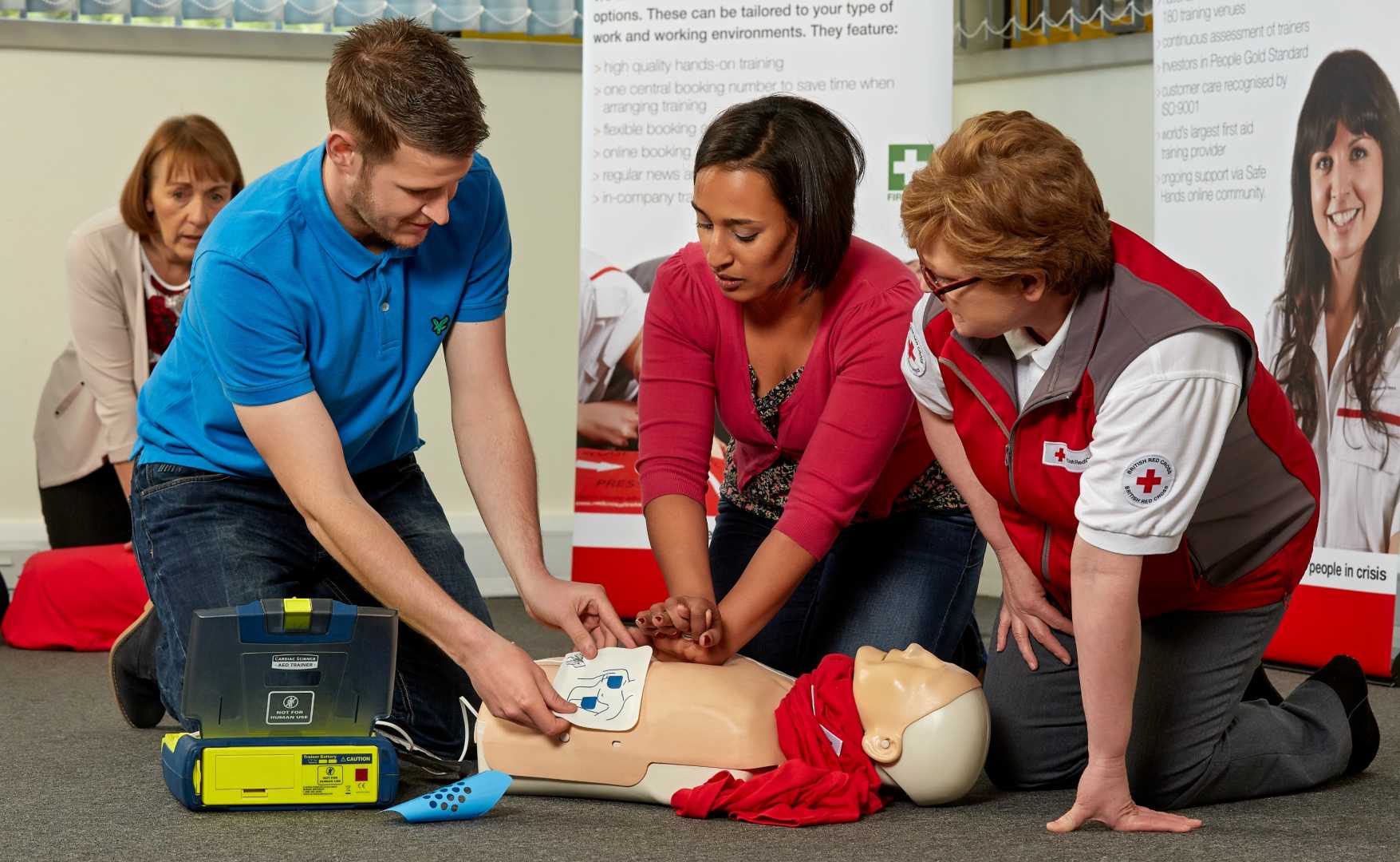
The pads and packaging clearly show where to place them. Even if placement isn’t perfect, the device can still work effectively.
2. Turn the AED on
The machine will start speaking. It guides you through every step — from pad placement to CPR timing.
3. Follow the voice prompts
AEDs walk you through:
When to stop CPR
When to stand clear
When a shock is advised
When to resume compressions
4. CPR guidance features
Some AEDs include a CPR feedback puck. When placed on the chest during compressions, the AED can:
Measure depth and rate
Tell you whether compressions are strong enough
Help maintain proper rhythm
These features give bystanders confidence during a stressful event.
Public Access Saves Lives
Provinces installing AEDs in schools and other public buildings are Helping communities become safer. With more devices available — and the knowledge that they’re simple to use — more people can step in and act during a cardiac emergency.
Remember: You can’t harm someone by trying. But you can save their life.
Learn CPR & AED Skills
Training gives you the confidence to act quickly when seconds matter.
Additional reading:
Serving Calgary and the surrounding areas the lowest priced, highest quality OH&S approved first aid training, CPR and food safety courses for over 15 years!
 Support locally-owned and Canadian-operated businesses, with no partnerships or links with American corporations.