Calgary First Aid: Map Makes It Easier to Find the Nearest Defibrillator in Nova Scotia
Quick access to lifesaving equipment can make all the difference during a cardiac emergency. In Nova Scotia, a publicly available online map is helping residents identify where automated external defibrillators (AEDs) are located within their communities.
According to a CBC News report by Elizabeth McMillan, Emergency Health Services (EHS) has released the locations of 684 registered AEDs across the province. These devices are placed in businesses, community organizations, and with first responders to improve outcomes during sudden cardiac arrest.
How the AED Map Works
The interactive map allows users to search their area and view nearby AED locations. Devices are clearly colour-coded to improve visibility:
Blue markers represent AEDs carried by first responders
Red markers indicate public defibrillators in businesses and organizations
Orange markers show recently registered AEDs
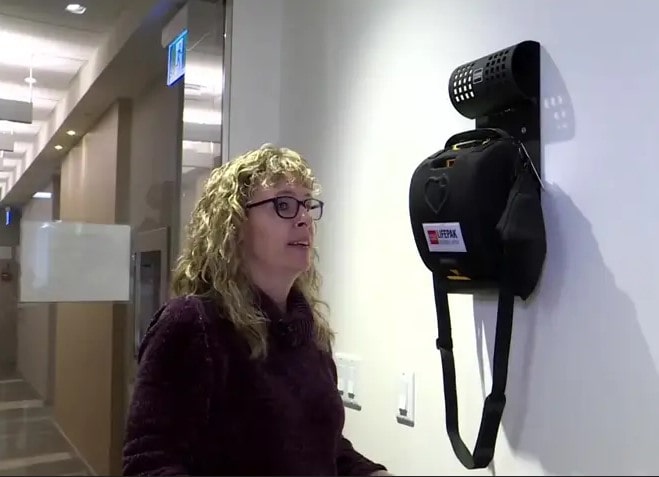
Each listing includes an address, allowing people to become familiar with where defibrillators are located near their homes, workplaces, and frequently visited areas.
Why AEDs and CPR Save Lives
Sudden cardiac arrest often causes the heart to enter a dangerous rhythm where it can no longer pump blood effectively. AEDs deliver a controlled electrical shock that can help restore a normal heart rhythm.
When used alongside high-quality CPR, defibrillation greatly improves survival rates by reducing the time the brain and vital organs are deprived of oxygen. This is why learning CPR and AED use is such a critical skill for the public.
Calgary First Aid, AED training is a core component of CPR education. Our CPR and AED courses are designed to help individuals respond confidently and effectively before emergency responders arrive.
Encouraging Public Awareness Before Emergencies
Paramedic Mike Janczyszyn, who coordinates Nova Scotia’s provincial AED registry, hopes people will use the map to familiarize themselves with AED locations before an emergency happens.
Rather than relying on the map in real time, residents are encouraged to review AED locations ahead of time and consider accessibility. Some devices may be inside buildings that are locked after hours or only accessible during business operations.
Important Limitations to Know
EHS cautions that the map:
Is not intended for real-time emergency use
May not display properly on mobile devices
Does not guarantee 100% accuracy
In addition, while 684 AEDs are publicly listed, 164 more registered devices are not shown because owners did not authorize their addresses to be shared.
A Step Toward Faster Emergency Response
The interactive map replaces an older static image that did not allow users to zoom in or pinpoint exact locations. It represents a major step forward in public access to lifesaving tools.
The province has also introduced software that could eventually allow 911 dispatchers to direct callers to a nearby AED during cardiac arrest emergencies. When fully implemented, dispatchers will be alerted if a defibrillator is within 1,200 metres of the caller’s location.
Learn the Skills That Make AED Access Count
Knowing where AEDs are located is important—but knowing how to use one properly is just as essential. CPR and AED training empowers everyday people to take immediate action when seconds matter most.
Through hands-on instruction, Calgary First Aid helps students gain the confidence and skills needed to respond during cardiac emergencies at work, at home, or in public spaces.
Prepared people save lives.
Serving Calgary and the surrounding areas the lowest priced, highest quality OH&S approved first aid training, CPR and food safety courses for over 15 years!
 Support locally-owned and Canadian-operated businesses, with no partnerships or links with American corporations.