Edmonton Taxi Shooting Underscores the Need for CPR Training
A tragic shooting in northwest Edmonton has once again highlighted how important it is for everyday people to know cardiopulmonary resuscitation (CPR).
In the early hours of August 26, 2017, a man was found critically injured in the front passenger seat of a taxi parked outside Flux Ultra Lounge, near 142 Street and Yellowhead Trail. Police arrived around 5 a.m. and immediately began CPR in an effort to save his life. Despite their attempts, the man was pronounced dead at the scene.
The taxi driver, who worked for Alberta Co-op Taxi, was not physically harmed. The company later expressed condolences to the victim’s family and relief that their driver was safe.
According to reporting by the Edmonton Journal, the death is being treated as suspicious and homicide detectives quickly took over the investigation. You can read the original news story here:
Man found dead in taxi after shooting may be city’s latest homicide
Call for Witnesses and Community Impact
Investigators believe a large number of people may have been in the parking lot and surrounding area when the shooting occurred. Police are asking anyone who was in or around the nightclub and saw or heard anything related to the incident to come forward.
The shooting took place in a busy strip mall that includes a lounge, a McDonald’s, and several small businesses. When staff and owners arrived later that morning to open their doors, they were met with a heavy police presence and the sobering aftermath of the event — including shattered glass and visible bloodstains on the pavement.
Local shop owners described the incident as unlike anything they had seen there before. While minor disturbances such as broken bottles and occasional fights had happened in the past, this was the first time such a serious act of violence had occurred in the area.
Even When Outcomes Are Tragic, CPR Still Matters
In this case, CPR did not change the outcome — but that does not lessen its importance.
When someone collapses from a cardiac arrest (which can happen after trauma, blood loss, or other medical emergencies), the brain and vital organs are starved of oxygen within minutes. High-quality CPR helps keep blood moving until advanced medical care can take over.
Key points to remember:
CPR gives a chance, even when the situation is critical.
We cannot control the severity of an injury, but we can control how quickly and effectively we respond.Early action is vital.
Calling 911 immediately and starting CPR right away greatly increases the chances of survival in a sudden cardiac arrest.Bystanders make a difference.
In many emergencies, help is needed in the first few minutes, before paramedics arrive. A trained bystander can be the link between life and death.
What You Can Do in an Emergency
If you witness someone collapse or come upon an unresponsive person:
Make sure the scene is safe.
Do not put yourself in danger.Check for responsiveness and breathing.
Tap the person and shout. If they are not responding and not breathing normally, act fast.Call 911 (or your local emergency number).
Put your phone on speaker so you can follow the dispatcher’s instructions.Start chest compressions.
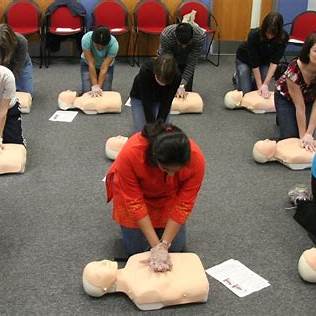
Place the heel of your hand in the center of the chest.
Push hard and fast, allowing the chest to recoil between compressions.
Aim for a steady rhythm until help arrives or an AED (defibrillator) is available.
Use an AED if one is available.
Turn it on, follow the voice prompts, and continue CPR when advised.
You do not need to be perfect — doing something is far better than doing nothing.
Prepare Yourself Before an Emergency Happens
Situations like the Edmonton taxi shooting are rare, but cardiac emergencies are not. Having CPR skills means you are ready to help a family member, coworker, stranger, or anyone in your community who suddenly collapses.
By taking a certified CPR course, you will learn:
How to recognize cardiac arrest and other life-threatening emergencies
Proper CPR techniques for adults (and, in many courses, children and infants)
How to use an AED safely and effectively
What to do in situations involving severe bleeding, shock, or trauma
If you are in the Calgary area and would like hands-on, practical CPR and AED training, you can register for a course with Calgary First Aid.
Learn More and Get Trained
If you want to be better prepared to respond in an emergency, consider enrolling in a CPR and first aid training course and reviewing these helpful resources:
Serving Calgary and the surrounding areas the lowest priced, highest quality OH&S approved first aid training, CPR and food safety courses for over 15 years!
 Support locally-owned and Canadian-operated businesses, with no partnerships or links with American corporations.