Update: Montreal Police-Involved Shooting Leaves Community Shaken in the Gay Village
A man who appeared to be in severe distress was fatally shot by Montreal police Tuesday evening inside his subsidized housing unit in the Gay Village. Neighbours describe him as a troubled but familiar presence in the building — someone they had known for years, even if only in passing.
This article draws information from the original Montreal Gazette report, which can be read here:
Update: Man dies after being shot by Montreal police in Gay Village
What Happened
Police were called around 7 p.m. to an apartment building at Robillard Ave. and St-André St. after reports of a man in crisis. According to the Bureau des enquêtes indépendantes (BEI), the province’s police watchdog, officers arrived to find the man “destroying everything” in his unit while holding a screwdriver in each hand.
Neighbours say he lived alone and had been visibly struggling with his mental health. He was known simply as Pierre. Though his identity has not been officially released, he was believed to be 58 years old, of Haitian origin, and had recently received notice that he was facing eviction — a situation that may have intensified his distress.
Police Intervention
Officers first attempted to subdue the man using a Taser and plastic bullets, but these methods were unsuccessful. The BEI has stated that it remains unclear what led officers to fire multiple shots with their service weapons.
Residents on the same floor reported hearing officers repeatedly order the man to calm down and get on the ground. Moments later, several gunshots rang out.
Medical Response and Timeline
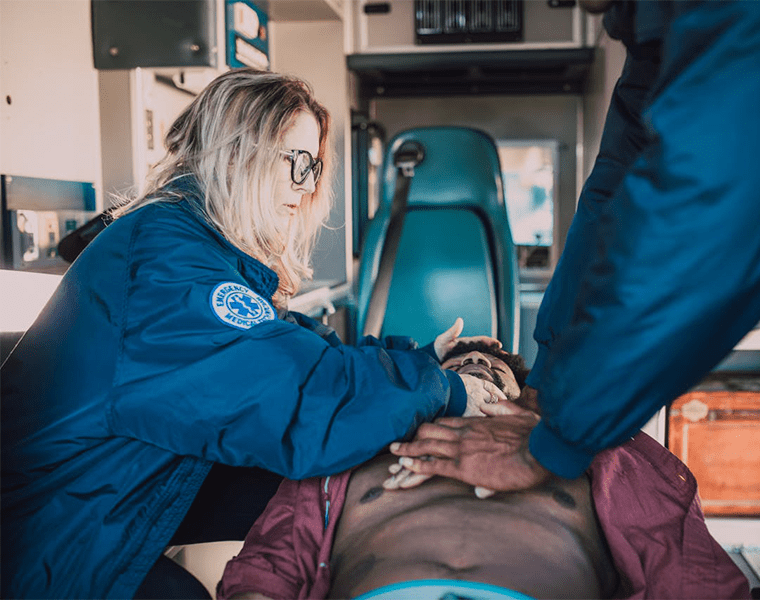
Urgence-Santé paramedics arrived around 7:30 p.m., finding the man in cardiac arrest. They performed CPR before transporting him to a nearby hospital, where he was pronounced dead around 9:45 p.m.
This incident highlights how quickly a medical emergency, such as cardiac arrest, can unfold — even in situations involving police intervention.
If you want to be prepared to help in a life-threatening emergency, consider learning CPR.
Neighbour Reactions: Fear, Sadness, and Reflection
Many neighbours described Pierre as a man dealing with significant mental-health struggles. Some recalled hearing him scream inside his unit or on his balcony almost daily. Others noted that he could be anxious, introverted, and difficult to communicate with.
“When people are sick, they sometimes scream,” said neighbour Lawrence Dulac. “He may have bothered other people, but he didn’t bother me. It’s sad — he was someone we had known for years.”
Another resident said he often heard loud crashes from Pierre’s apartment when he was in crisis, such as breaking plates. A different neighbour mentioned that the building frequently saw police calls due to ongoing mental-health issues among some residents.
For some living nearby, the incident was especially unsettling.
“I have kids and I’m trying to sell my condo,” said one resident next to the building. “It’s time to get out.”
Investigation Underway
The BEI has assigned 12 investigators, along with two officers from the Sûreté du Québec, to determine exactly what occurred and whether police actions were justified.
Montreal police have not provided additional comments, as the case is now under independent investigation.
Why CPR and First Aid Skills Matter
Emergencies can escalate rapidly, and bystanders with proper training can play a crucial role before paramedics arrive. Learning CPR and basic first aid empowers everyday people to make a meaningful difference in critical moments.
To learn how to react confidently during an emergency, explore training options or enroll in a certified CPR course.
Helpful First Aid Resources
Serving Calgary and the surrounding areas the lowest priced, highest quality OH&S approved first aid training, CPR and food safety courses for over 15 years!
 Support locally-owned and Canadian-operated businesses, with no partnerships or links with American corporations.